
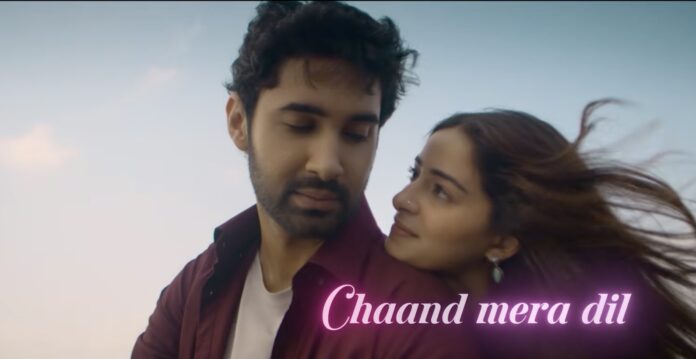
Monday, May 26, 2206: A single dance sequence has ignited one of the most heated debates in recent Bollywood memory. Ananya Panday’s portrayal of Bharatanatyam in her upcoming series Chand Mera Dil has drawn pointed criticism from classical dance practitioners and audiences alike, who argue the performance misrepresents the centuries-old art form.
It began, as most modern controversies do, with a clip. A few seconds of footage from the upcoming Hindi streaming series Chand Mera Dil, featuring actress Ananya Panday performing what was choreographed as a Bharatanatyam-inspired sequence, began circulating on social media in the early hours of Monday morning. By midday, the clip had accumulated millions of views, thousands of comments, and had fractured opinion along predictable — and some entirely unexpected — fault lines.
The backlash was immediate and visceral. Classical dance practitioners, many of them trained Bharatanatyam artists with decades of stage experience, posted video responses dissecting precisely what, in their view, had gone wrong. The posture was off. The mudras — the intricate hand gestures that form the very grammar of the dance form , were described as misapplied or altogether absent. The footwork, critics argued, bore little resemblance to the disciplined, rhythmic tattu adavus that form the backbone of a form dating back at least to the Natya Shastra. For these practitioners, this was not a minor technical quibble. It was a matter of identity, heritage, and hard-won mastery being reduced to aesthetic set dressing.
Bharatanatyam is not merely a performance tradition , it is a spiritual and philosophical system encoded in movement. Every angle of the arm, every expression of the eyes, every placement of the feet carries specific meaning within a codified vocabulary that practitioners spend years, sometimes decades, internalising. To see those gestures deployed loosely, without apparent understanding of their significance, felt to many artists less like artistic licence and more like appropriation without acknowledgment, the taking of a form’s surface beauty while discarding its substance.
Chand Mera Dil: The Bharatanatyam Controversy That Has Bollywood Talking
What transformed the conversation from a niche artistic debate into a full-blown internet event was the emergence of comparison videos. Social media users, many of them film enthusiasts rather than dance scholars, began splicing Ananya’s performance with archival clips of the legendary Sridevi and contemporary powerhouse Sai Pallavi performing classical or classical-inspired sequences on screen. The contrast was stark and deliberate.
Both Sridevi — whose command of expression and movement remains a benchmark decades after her passing, and Sai Pallavi, who brings rigorous physicality and emotional authenticity to every frame she occupies, were held up as the standard Bollywood should aspire to. The implicit message resonated with millions who may not know a mudra from a mudde but could immediately feel the difference in commitment, preparation, and craft.
The phrase “this is how you do it,” accompanying these mashup videos, spread rapidly. It was catchy, a little cruel, and it stuck. By evening, the hashtags associated with the controversy were trending in multiple Indian cities simultaneously, a testament to how deeply people feel about classical arts being represented , or misrepresented , in popular culture.
The Defence and the Divide
Not everyone joined the chorus of criticism. The choreographer of the sequence offered a spirited public rebuttal, stating that Ananya had “nailed it” , words that, perhaps predictably, intensified rather than dampened the controversy. Several entertainment journalists and cultural commentators pushed back on what they characterised as social media pile-ons that failed to distinguish between a performance piece within a dramatic context and a stage recital at a formal arangetram. The series was not attempting to document or instruct, they argued. It was a romantic drama, not a dance documentary.
This argument found some sympathy, but it also opened a second front in the debate: even if dramatic licence is granted, does the sheer scale of mainstream Bollywood’s reach impose a responsibility on filmmakers to get it right? When a series is watched by tens of millions, and many of those viewers have never attended a classical performance, does a careless depiction become the reference point they carry for what Bharatanatyam looks like? Classical artists argue it does, and they argue that this matters enormously , because once an inaccurate image is embedded in mass consciousness, correcting it requires effort that the original producers will never be asked to undertake.
The controversy around Chand Mera Dil is, in truth, not new. Bollywood has a long and complicated relationship with classical arts, borrowing their visual vocabulary, their emotive power, and their aesthetic prestige while frequently bypassing the years of disciplined training that give those forms their meaning. From classical music sequences that rely on playback manipulation to dance numbers that appropriate mudras as visual garnish, Indian cinema has repeatedly returned to the well of tradition without always doing it justice.
What feels different this time is the speed and ferocity of the pushback, and the platforms it has found. Classical dancers who might once have expressed their frustration in closed rehearsal rooms now have Instagram Reels, YouTube Shorts, and Twitter threads to amplify their critique directly to the public. They are no longer speaking only to each other and their students. They are speaking to the audience that the films court. And the audience, it turns out, is listening and responding.
Whether the controversy ultimately affects viewership of Chand Mera Dil in any measurable wa, experience suggests it will probably drive curiosity more than it will deter it, the deeper question it has raised will linger well beyond the series’ release cycle: who gets to represent a living, sacred art form to a mass audience, and what do they owe to those who have devoted their lives to preserving it?