
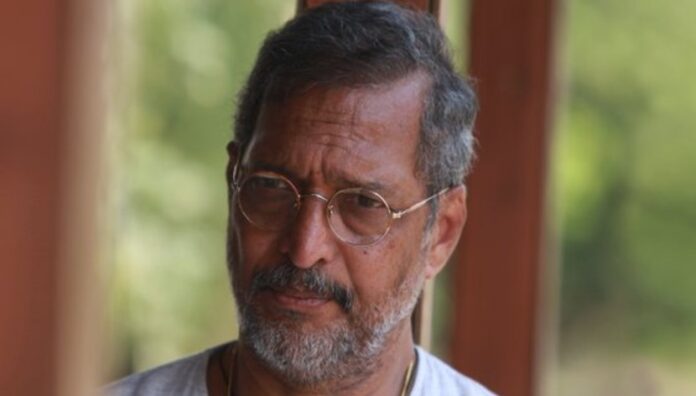
October 11, 2026: When the final journey of a celebrated actor Nana Patekar draws more farmers than film stars, the absence itself becomes a statement. That was the point Marathi filmmaker Pravin Tarde made while reflecting on Nana’s funeral, questioning why more Bollywood personalities failed to turn up to pay their last respects.
Speaking on ABP Majha’s Coffee with Kaushik, Tarde said the absence of film industry figures could never diminish Patekar’s stature. But he made no attempt to hide his disappointment, particularly towards those who had shared a personal bond with the veteran actor.
“Bollywood is not bigger than Nana,” Tarde said, underlining what he believed was a fundamental truth about Nana Patekar’s legacy. For him, the thousands of farmers who gathered for the actor’s final journey mattered far more than the glitter of the film industry.
“They smelled of sweat and soil,” he said, drawing a sharp contrast between the farmers who came to mourn and the celebrities who were conspicuous by their absence.
‘Bollywood Is Not Bigger Than Nana Patekar’: Pravin Tarde
Tarde’s remarks went beyond a complaint about attendance. They raised a larger question about how the film industry measures respect, friendship and the value of its own people. Bollywood is often quick to come together for high-profile events, award ceremonies and public appearances. Yet, according to Tarde, the turnout for Nana Patekar’s final rites did not reflect the stature of a man who had spent decades earning respect through his work.
Still, the filmmaker was careful to distinguish between the industry’s absence and Patekar’s importance. The actor, he suggested, had never needed Bollywood to validate his standing.
Nana Patekar’s identity, in Tarde’s view, extended well beyond cinema. His association with farming communities and rural Maharashtra had helped him build a connection with ordinary people that celebrity status alone could never guarantee.
“I think a farmer who came from Dhule is much greater than Bollywood heroes,” Tarde said. He added that Nana Patekar often identified himself as a farmer rather than someone who belonged to Bollywood.
That connection was visible at the funeral, where farmers joined political figures, artists and other well-wishers to bid farewell to the actor. For Tarde, their presence was perhaps the strongest tribute Patekar could have received.
But the filmmaker did have a grievance. He argued that those whom Nana Patekar considered friends should have made the effort to attend his final rites. Among the film personalities who did turn up were Jackie Shroff and singer Suresh Wadkar.
Tarde also questioned what he saw as a striking difference in the industry’s response to celebrity deaths. He observed that even when a relatively lesser-known actor dies in Mumbai, film personalities often gather in large numbers. Nana Patekar’s funeral, he suggested, deserved at least the same show of solidarity.
Patekar died in Goa on October 8 following a severe heart attack. His mortal remains were taken to his native village of Donje, near Pune, where his last rites were performed on his farm. Filmmaker Anees Bazmee, actor Makarand Anaspure, Prasad Oak and singer Rahul Deshpande were among the other personalities who attended.
There is, of course, a difference between judging an entire industry by funeral attendance and asking whether personal relationships deserve a public farewell. Absence alone cannot explain why someone did not attend. But Tarde’s criticism points to an uncomfortable perception: that the film industry’s public displays of togetherness do not always translate into visible solidarity when it matters most.
Ultimately, the farmers who gathered for Patekar’s final journey offered a reminder that an actor’s legacy is not confined to the people who share his profession. The applause of an industry may bring fame, but the affection of ordinary people can give that fame a deeper meaning.
And that may be the most pointed part of Tarde’s message. Bollywood’s absence did not make Nana Patekar smaller. If anything, the sight of farmers coming together to mourn him showed how much he meant to people beyond the screen.