
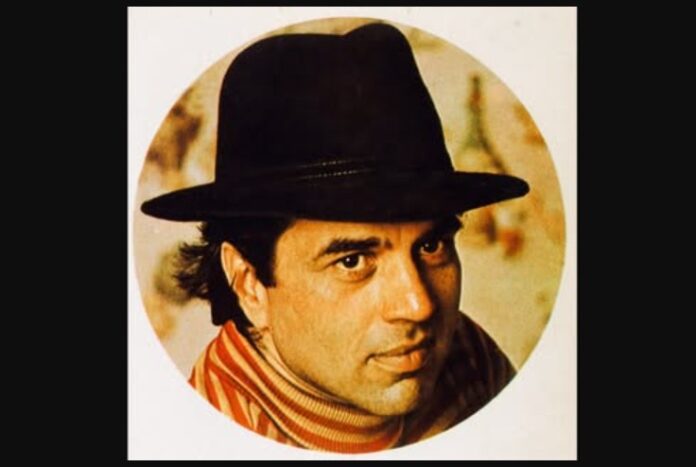
November 24, 2025: “Yeh dosti hum nahi todenge,” Dharmendra’s iconic line from Sholay still rings in the hearts of millions, an enduring legacy of the Bollywood legend who passed away today at the age of 89.
Dharmendra, the larger-than-life figure often hailed as the “He-Man” of Hindi cinema, has left behind a legacy that transcends generations. His death marks the end of an era in Indian cinema, but his influence and timeless charm will forever echo in the hearts of fans. The actor, who had recently been hospitalized for respiratory issues, was discharged but succumbed to his health complications today, leaving the nation in mourning.
Dharmendra The “He-Man” Who Conquered Hearts
From the moment Dharmendra appeared on screen, his presence was undeniable. With his rugged good looks, powerful frame, and unmatched screen charisma, he became the quintessential hero of 1960s and 70s Bollywood. His first major hit, Phool Aur Patthar (1966), introduced the world to a new kind of leading man, one whose brawn was matched by his vulnerability. It was in this film that Dharmendra earned the iconic title “He-Man” after his memorable bare-chested scene.
But beyond his imposing physique, Dharmendra was a man of range, his ability to portray both tough, action-packed heroes and sensitive, nuanced characters made him beloved across the nation. Sholay (1975), the film that defined him, featured him in the unforgettable role of Veeru, where his camaraderie with Amitabh Bachchan’s Jai remains one of the most celebrated duos in cinematic history. “Yeh dosti hum nahi todenge”, his line from that film, remains one of the most quoted dialogues in Bollywood history, symbolizing the unbreakable bond of friendship.
A Versatile Star Across Generations
Born on December 8, 1935, in Nasrali, Punjab, Dharmendra’s journey to stardom was nothing short of cinematic itself. He moved to Bombay (now Mumbai) in the early 1960s after winning a talent contest by Filmfare magazine. Making his debut in 1960 with Dil Bhi Tera Hum Bhi Tere, he quickly became a favorite for his versatile roles. His career spanned more than six decades, with over 250 films to his name.
Whether playing the idealistic young man in Satyakam (1969), the charming lover in Chupke Chupke (1975), or the heroic leader in Haqeeqat (1964), Dharmendra’s performances were marked by a rare blend of rugged strength and quiet vulnerability. He was as comfortable delivering intense, action-packed dialogues as he was in comedic roles, like his iconic turn in Chupke Chupke, where he left audiences in splits.
His portrayal of the flawed yet noble Veeru in Sholay remains his most celebrated, but his filmography is a tapestry of diverse roles that demonstrated his ability to adapt to any genre, from action to drama to comedy. Films like Mera Gaon Mera Desh (1971), Yaadon Ki Baaraat (1973), and Seeta Aur Geeta (1972) showed his versatility, while his films with Hrishikesh Mukherjee, such as Anupama (1966) and Bandini (1963), displayed his capacity for more nuanced, serious roles.
Family, Legacy, and the Next Generation
Dharmendra’s personal life mirrored the romance of his films. He married Prakash Kaur before entering the film industry, and together they had four children, including sons Sunny and Bobby Deol, both of whom became successful actors in their own right. However, his most famous pairing was with actress Hema Malini, whom he married in 1980 after co-starring in over 40 films together. Their relationship, both on-screen and off, was a beloved part of Bollywood’s golden age.
In 2004, Dharmendra also ventured into politics, representing the Bikaner constituency in India’s Parliament for the Bharatiya Janata Party (BJP) until 2009. Despite his political career, his love for cinema remained strong, and in recent years, he made a return to the screen, impressing audiences with his performance in Rocky Aur Rani Kii Prem Kahaani (2023). In the film, his portrayal of Ranveer Singh’s grandfather moved audiences to tears, with Dharmendra’s poignant on-screen death scene becoming one of the film’s most emotional moments.
A Humble Icon
Despite his fame, Dharmendra was known for his humility and warmth, both on and off the screen. Over the years, he remained a beloved figure in Bollywood, respected not just for his talent but for his generosity of spirit. In interviews, colleagues often spoke of his down-to-earth nature, making him a favorite among both fans and fellow actors. He was awarded the Filmfare Lifetime Achievement Award in 1997, and in 2019, he was honored with the Padma Bhushan, one of India’s highest civilian awards, for his immense contribution to Indian cinema.
His enduring influence on Indian cinema was also reflected in his final years, where he stayed connected with fans through social media and public appearances, often reminiscing about the golden age of Hindi films. Prime Minister Narendra Modi expressed his condolences, calling Dharmendra “a phenomenal actor who brought charm and depth to every role.”
A Nation Mourns
Dharmendra leaves behind a legacy of cinematic excellence, a family of stars, and a nation of fans who will forever remember him not just as the “He-Man” but as an icon who defined an entire era of Bollywood.
Survived by his wife Hema Malini, children Sunny, Bobby, Karan, Esha, and Ahana Deol, and millions of fans across the globe, Dharmendra’s legacy is indelible. From his legendary action roles to his gentle, sensitive portrayals of love and friendship, he remains one of Bollywood’s finest actors. Today, the world says goodbye to Dharmendra, but his films, his words, and his legacy will live on forever.