

August 1, 2025: Set in a law school in Bhopal, Dhadak 2 opens with a question that says more than it asks: What would the law say about cannibalism in an extreme survival situation? Neelesh (Siddhant Chaturvedi), the first in his Dalit family to attend college, poses this question to his neighbours. Their response, dark, ironic, and unflinching, sets the tone for what follows: a film that treats caste not as a symbol, but a living condition.
Directed by Shazia Iqbal, Dhadak 2 is a Hindi adaptation of Pariyerum Perumal (2018), though it doesn’t simply replicate the Tamil original. It recontextualizes its core in a North Indian setting and finds its own rhythm, language, and pain.
Neelesh, who arrives at college with quiet ambition and a sense of hope, meets Vidhisha (Triptii Dimri), a girl from a privileged background. Their relationship grows tenderly but exists under constant pressure—from peers, family, professors, and a system not built to include people like Neelesh. Their love is real, but the world around them isn’t willing to accept it without consequences.
What Dhadak 2 does effectively is illustrate how caste-based discrimination works not just through overt violence, but through humiliation, alienation, and the quiet reinforcement of barriers. From professors mocking Neelesh’s English to him avoiding saying his surname in class, the film lingers on these details without dramatizing them.
There are moments of brutality too, paint thrown on his body, his father assaulted, and his mother slapped by police, but the film doesn’t build spectacle around these scenes. Instead, they emerge as consequences in a world where caste hierarchy is enforced silently, but efficiently.
Iqbal and co-writer Rahul Badwelkar make subtle but sharp choices. The delayed placement of a key violent act, one that appeared early in Pariyerum Perumal, is a deliberate move. It forces viewers into a false sense of comfort, only to break it with a scene that feels disturbingly plausible. A later sequence, clearly referencing the Rohith Vemula tragedy, brings urgency to the film without reducing it to protest art.
Shazia Iqbal’s directorial debut reshapes a southern classic into a grounded, caste-aware Hindi film
Siddhant Chaturvedi’s Neelesh is one of his most restrained performances to date. His body languag, stooped shoulders, polite hesitations, cautious smiles, tells us everything about a young man used to navigating around prejudice rather than confronting it. Triptii Dimri’s Vidhisha is less dramatically drawn, but her character arc, awakening to her own privilege, is handled with care.
Dhadak 2 Brings Caste to the Fore in a Stirring Campus Tale
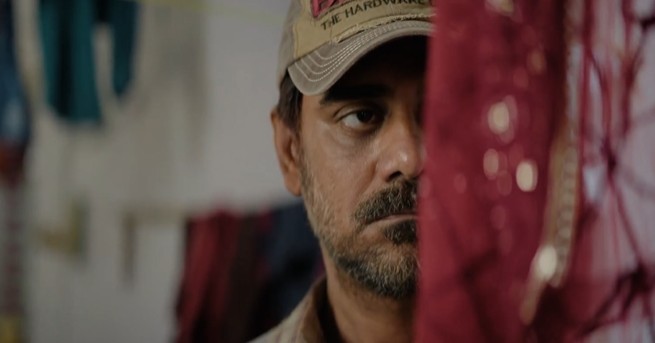
There’s also a shadowy assassin figure played with eerie calm by Saurabh Sachdeva. Unlike typical antagonists, he’s not loud or visible, but quietly terrifying. He seems to symbolize caste-based violence in its most insidious form, silent, untraceable, and always lurking.
The only real flaw is the film’s title. Naming it Dhadak 2 suggests continuity from the 2018 Dhadak, which itself was a remake of Sairat. But Dhadak 2 is neither a sequel in spirit nor tone. It’s not about a cinematic brand—it’s about a systemic burden. The choice of title may draw attention, but it risks undercutting the film’s gravity and purpose.
Still, Dhadak 2 stands out as a Hindi film that neither preaches nor flinches. It sits with discomfort and invites viewers to do the same. There is no tidy resolution, no dramatic revenge, no courtroom victory. What remains is a quiet, enduring resistance, and that might just be the point.