
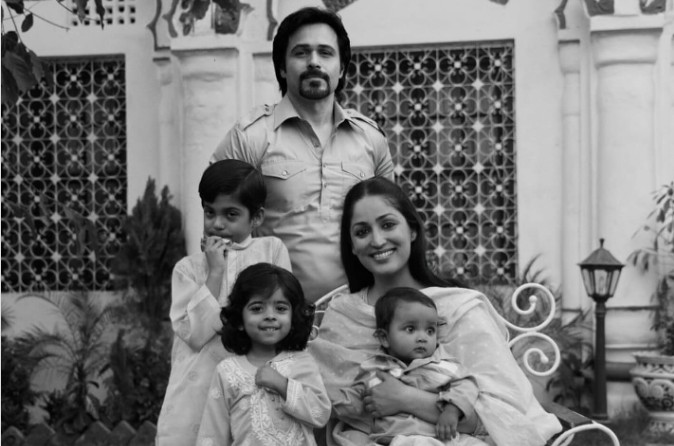
November 5, 2025: Haq Review: In a time when courtroom dramas often chase headlines and outrage, Haq chooses a quieter path. It doesn’t rush to prove a point or dramatize injustice. Instead, it sits with discomfort, allowing the audience to feel the weight of silence, the sting of everyday cruelty, and the quiet courage it takes to say, “Enough.” Suparn Verma’s direction is not about spectacle — it’s about stillness. And in that stillness, Haq finds its voice.
Inspired by the historic Shah Bano case, Haq isn’t a courtroom drama in the traditional sense. It’s a portrait of Shazia Bano (Yami Gautam), a woman navigating a system designed to silence her. The film opens with her smirking in defiance, dressed in black to avoid the muck thrown at her — a moment that sets the tone for what follows: quiet resistance.
The story rewinds to 1967 in a small town in Uttar Pradesh, where Shazia’s life begins to unravel. Verma builds this world slowly, letting us sit with her joys and heartbreaks before the storm hits. And when it does, it’s not cinematic, it’s painfully ordinary. That’s what makes it so real.
Haq Review in Short : Emraan Hashmi’s Entitlement Meets Yami Gautam’s Resolve in this courtroom drama
Emraan Hashmi plays Abbas Khan, Shazia’s husband, with chilling restraint. He’s not a caricature of evil, but a man who weaponizes faith and entitlement to justify cruelty. His actions, marrying again, misusing talaq, and manipulating religious norms, are shown not as attacks on religion, but as distortions of it. Verma’s lens is balanced, refusing to vilify faith while exposing how power and ego can twist its meaning.
The film’s strength lies in its refusal to preach. It presents both sides of the legal and religious argument, showing that Sharia and secular law both advocate fairness. It’s a rare feat in today’s polarized climate.
Yami Gautam delivers a career-defining performance. Her portrayal of Shazia is layered with rage, restraint, and resilience. She doesn’t scream for justice, she earns it. Emraan Hashmi, too, is quietly terrifying, embodying a man so blinded by entitlement that he can’t see the damage he causes. Their courtroom showdown is one of the film’s most powerful scenes.
The writing by Reshu Nath is sharp, especially in its dialogue. Lines like “Kabhi kabhi mohabbat kaafi nahi hoti, izzat bhi zaruri hoti hai” drew applause in the theatre. It’s a line that sums up the film’s core: love without respect is just another form of control.
The film also explores Section 125 of the CrPC and its relevance to alimony rights, tying it back to the Shah Bano case. While the political aftermath is briefly mentioned in the credits, the focus remains on the personal.
There are flaws, of course. The heavy use of Urdu adds authenticity but may alienate some viewers unfamiliar with the language. The music, while functional, doesn’t linger. But these are minor quibbles in a film that leaves a lasting impact.
Suparn Verma’s Haq is a quiet triumph. It doesn’t ask for sympathy, it demands dignity. And in doing so, it reminds us that the fight for respect is not just legal, it’s deeply personal.