
February 15, 2026: There’s a moment in O Romeo when identities are discussed not as geography, but as lineage. It’s less about where you come from and more about which tradition you inherit. That single exchange quietly reveals what Vishal Bhardwaj is attempting here: not a straightforward crime thriller, not a direct Shakespeare retelling, but a meditation on legacy, artistic, emotional and violent.
Set against the familiar grime of Mumbai’s criminal underbelly, O Romeo is Bhardwaj revisiting terrain he has mapped before, this time filtering it through the tragic inevitability of Shakespearean romance. The film does not retell Romeo and Juliet; instead, it borrows the inevitability of doomed love and places it amid gang rivalries, intelligence operations and personal vendettas.
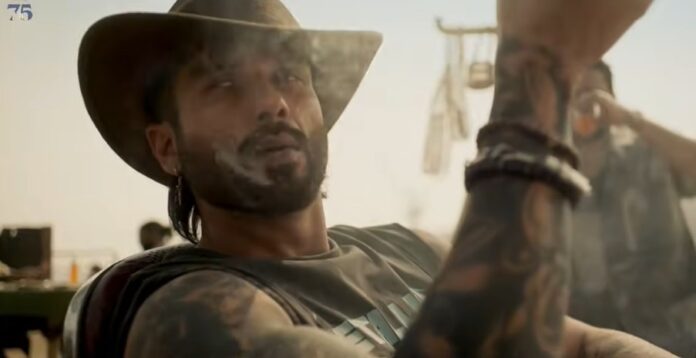
At the center is Hussain Ustara, played with restless energy by Shahid Kapoor. Ustara is less a romantic hero and more a man shaped by transactional violence. He works in the shadows of state machinery, handling assignments that blur the lines between patriotism and personal survival. Kapoor plays him as someone constantly on the brink, not merely of rage, but of emotional collapse. There’s volatility in his body language, but also fatigue in his eyes. It’s one of those performances where the actor seems determined to fill every silence with simmering intensity.
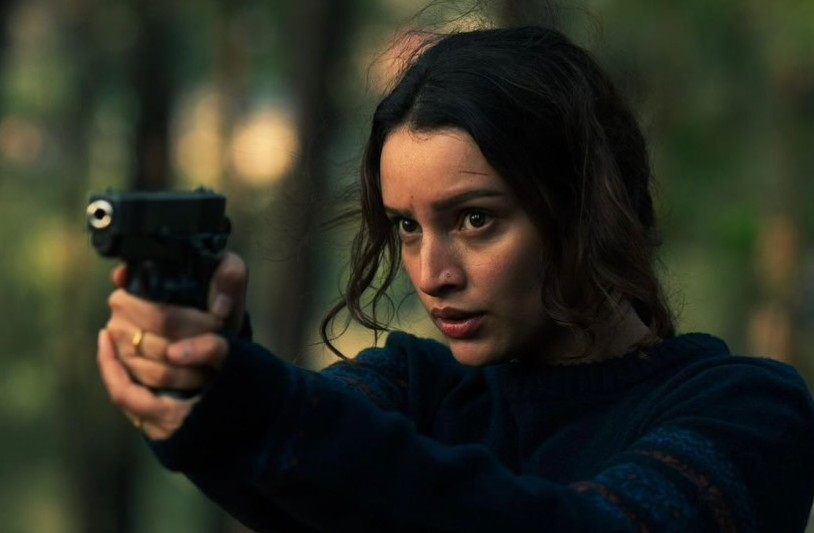
Opposite him is Afshan, portrayed by Triptii Dimri, a woman carrying grief like a second skin. She enters the story not as a passive love interest but as someone with unfinished business. Her motivation is revenge, but her journey becomes something murkier, a negotiation between justice and emotional surrender. Dimri approaches Afshan with restraint, often letting pauses do the heavy lifting. There’s steel beneath her fragility, though the screenplay sometimes hesitates to fully unleash it.
O Romeo Review: Afshan isn’t just a character, she’s fire and fragility in the same breath – Tripti Dimitri
The film draws partial inspiration from Hussain Zaidi’s Mafia Queens of Mumbai, mining real-world criminal lore for texture. Yet, instead of leaning into procedural grit, Bhardwaj steers toward operatic drama. The underworld here is less documentary and more theatrical stage, men deliver threats like monologues, and betrayals land with Shakespearean flourish.
There’s also a political undercurrent involving Jalal, played by Avinash Tiwary, a former ally turned extremist adversary. His trajectory hints at larger socio-political fractures, but the film touches on them more as backdrop than deep exploration. Tiwary gives the role physical menace, yet the character feels constrained by a script that simplifies what could have been a morally complex antagonist.
Watch O Romeo
The supporting cast includes heavyweights like Nana Patekar as a wry intelligence officer who seems to operate on instinct rather than protocol. Patekar brings moments of dry unpredictability, injecting life into scenes that might otherwise sag under exposition. Appearances from Vikrant Massey, Tamannaah Bhatia, Disha Patani and the ever-endearing Farida Jalal add layers of familiarity, though not all are given arcs substantial enough to resonate.
What’s striking about O Romeo is not its violence, though there’s plenty, but its reluctance to choose between pulp and poetry. Bhardwaj, long celebrated for blending lyricism with brutality, seems caught between crafting a mass-market action spectacle and a brooding character study. The action sequences are staged with flair, occasionally flirting with stylized excess. Yet just when the film builds momentum, it pauses for reflective dialogue or a musical interlude, disrupting narrative propulsion.
The soundtrack, threaded with Bhardwaj’s longtime collaborator Gulzar’s evocative lyrics, attempts to anchor the emotional stakes. The words ache; they speak of breath growing thin and love turning feverish. But while the poetry lingers, the storytelling sometimes drifts. The emotional peaks feel announced rather than earned, as though the film trusts the weight of its references more than the organic growth of its characters.
In many ways, O Romeo plays like a filmmaker revisiting his own obsessions. Bhardwaj has often explored the intersection of love and violence, most memorably in earlier works that reimagined Shakespeare for contemporary India. Here, however, the familiarity of the Mumbai gangster template dulls the tragic edge. The narrative arc, a conflicted hitman entangled with state forces and personal loyalties — unfolds along expected lines. Twists are telegraphed, betrayals anticipated.
Yet it would be unfair to dismiss the film outright. There are flashes of brilliance: a confrontation staged in near-silence, a fleeting glance between lovers that suggests surrender, a sardonic exchange that cuts through the gloom. Kapoor’s screen presence anchors the film even when the script wavers. Dimri, meanwhile, hints at a more layered tragedy than the screenplay consistently allows.
Perhaps the real tension in O Romeo isn’t between rival gangs or star-crossed lovers. It’s between two cinematic impulses, the desire to craft a sweeping, commercially viable crime saga and the urge to compose a tragic poem on celluloid. Bhardwaj attempts to straddle both, but the balance proves precarious.
By the end of its nearly three-hour runtime, you don’t feel devastated so much as contemplative. The film gestures toward grand heartbreak but lands in quieter melancholy. It’s less an explosion of passion and more a slow-burning elegy for characters who never quite escape the gravity of their world.