
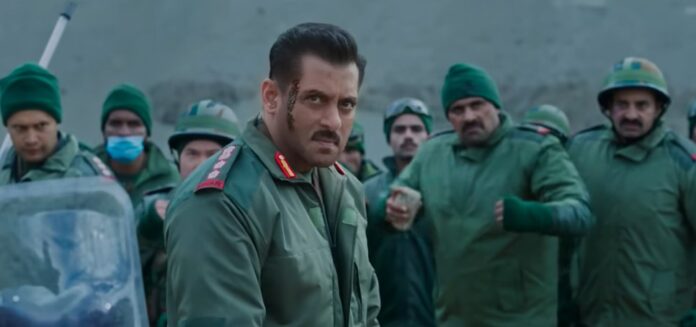
December 30, 2025: Bollywood’s latest war drama, Battle of Galwan, starring Salman Khan, has sparked a sharp reaction from Chinese state media, which accuses the film of distorting the facts surrounding the deadly 2020 border clash between India and China. Directed by Apoorva Lakhia, the film portrays the tense and violent confrontation in the Galwan Valley, where Indian soldiers, including Colonel Bikkumalla Santosh Babu, heroically defended their territory against the Chinese People’s Liberation Army (PLA).
Set against the backdrop of the high-altitude, harsh terrain of the Galwan Valley, the movie tells the story of Colonel Santosh Babu, who was killed while leading his troops in a fierce face-off with the PLA. Salman Khan plays the lead role of Babu, while Chitrangada Singh stars opposite him. The film also features Zeyn Shaw, Ankur Bhatia, and Vipin Bhardwaj in supporting roles.
China’s State Media Claims Battle of Galwan is “Over-the-Top” and “Emotionally Charged”
The Chinese government’s official newspaper, Global Times, has strongly criticized the film, claiming that it inaccurately portrays the events of the June 2020 clash. The article dismisses Battle of Galwan as an exaggerated and emotionally charged spectacle rather than a truthful representation of history. Citing unnamed experts, the Global Times goes as far as to describe the film as “over-the-top,” particularly targeting the portrayal of Colonel Santosh Babu’s role in the conflict.
The newspaper argues that no amount of cinematic dramatization can alter the facts or shake the PLA’s resolve in defending China’s claimed territories. It further claims that the Galwan Valley, where the clash occurred, lies within Chinese territory, and blames India for provoking the confrontation by crossing the Line of Actual Control (LAC).
In an attempt to counter India’s official acknowledgment of 20 soldiers killed in the clash, the article also accuses India of exaggerating the casualty figures. Although Beijing initially denied any losses, it later admitted to the deaths of four Chinese soldiers, a number far lower than what India reported. The Global Times claims that India is using films like Battle of Galwan to stoke nationalist sentiments and mislead the international community.
Indian Filmmakers Stand by the Film’s Integrity
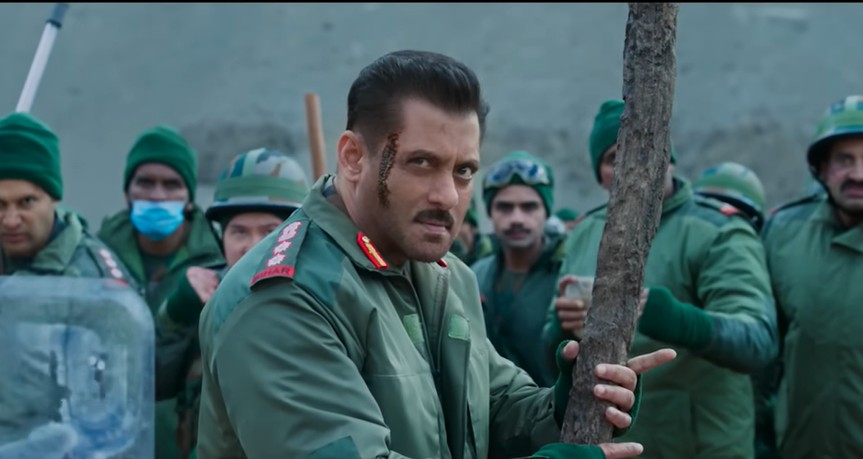
The film’s portrayal of the Galwan clash has not gone unnoticed in India, where many filmmakers and industry figures have responded to the backlash from China. Indian filmmakers argue that Battle of Galwan was created with thorough research and a commitment to honoring the sacrifices of Indian soldiers.
The controversy surrounding the film has highlighted the role of cinema in shaping national narratives, especially when it comes to sensitive geopolitical issues. While China’s official media tries to downplay the film’s significance, it has, in many ways, fueled interest in the movie.
At the core of the issue is India’s freedom of expression, including the right of filmmakers to depict historical events through their own artistic lens. Government sources have reiterated that the Indian government has no involvement in the film’s production and that filmmakers are free to tell their stories without state interference.
With tensions between India and China still simmering over border disputes, Battle of Galwan has added another layer to the ongoing diplomatic rift. As the film gears up for its release, it will undoubtedly become a point of conversation, both within India and internationally, as it brings to the forefront a tragic chapter in the history of India-China relations.