
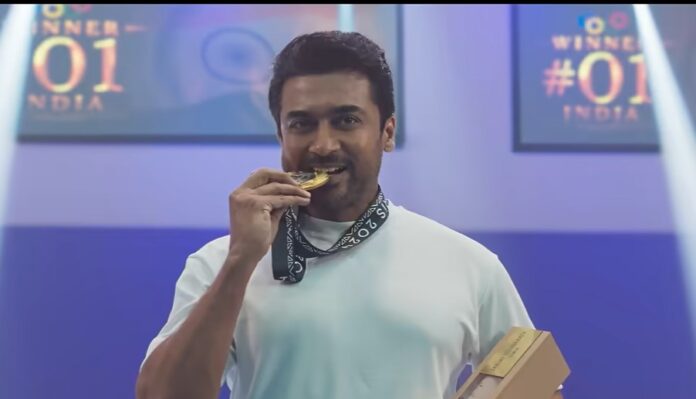
August 15, 2026: Vishwanath and Sons – there is something wonderfully refreshing about watching a star as popular as Suriya simply sit down, listen, smile and talk about love.
After years of action, spectacle and larger than life characters, Vishwanath and Sons brings Suriya into a much quieter world. Here, the biggest battles happen inside a family. The stakes involve love, parenthood, marriage and the complicated business of choosing your own life.
Directed by Venky Atluri, the film follows Sanjay Vishwanath, a wealthy businessman and former international pistol shooter in his 40s. Sanjay has built a successful life around himself and appears perfectly comfortable living alone. Marriage has never figured prominently in his plans.
His mother Nirmala Devi, played by Radikaa Sarathkumar, has other ideas. Her desire to see her son married and the family legacy carried forward sets the story in motion. Then Sanjay returns home with an infant son, opening the door to a series of questions that gradually bring Maddy, played by Mamitha Baiju, into his life.
From there, the film takes an unexpected turn. A friendship develops, affection follows, and Sanjay finds himself confronting emotions that his carefully organised life had kept at a safe distance.
The premise sounds like the beginning of a conventional romantic drama. Atluri gives it a warmer and more interesting shape during much of the first half.
Suriya without the superstar armour
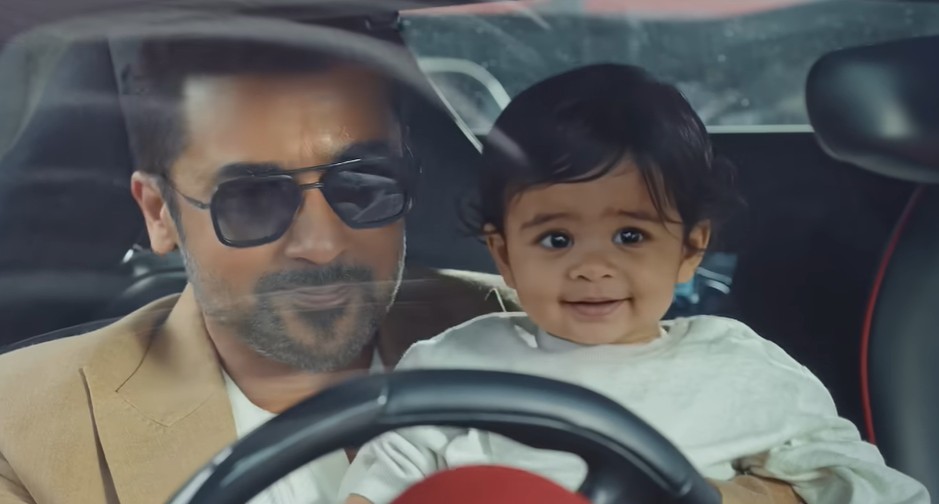
The biggest pleasure of Vishwanath and Sons is Suriya himself.
The actor does very little to remind you that he is a major star. There are no grand entrances demanding applause. There are no elaborate action stretches built around his image. Instead, he allows Sanjay to exist as a man who is occasionally confused, occasionally amused and often quietly vulnerable.
It is a restrained performance, and that restraint works beautifully. Suriya understands the small details of the character. His conversations with his mother have an easy warmth. His scenes with Maddy carry an effortless comic rhythm. His moments with his son give the character an emotional centre.
The film reminds you that Suriya can hold attention without needing spectacle around him.
Mamitha Baiju brings the spark
Mamitha Baiju is equally important to the film’s charm. As Maddy, she brings spontaneity and warmth without turning the character into a collection of familiar romantic heroine traits. She is funny, impulsive, confident and vulnerable in equal measure.
Her chemistry with Suriya gives the first half much of its energy. Their conversations feel playful and natural, and the age difference between the characters is allowed to exist as part of the story rather than becoming the entire story.
That choice gives the relationship some dignity. Radikaa Sarathkumar is another major strength. Her Nirmala Devi is affectionate, determined and occasionally exasperating in ways that will feel familiar to anyone who has watched a parent worry about a child’s future.
Her scenes with Suriya carry some of the film’s most genuine warmth.
Where the film loses its rhythm
The first half is where Vishwanath and Sons is at its most enjoyable. The comedy lands. The family interactions feel lively. Maddy brings freshness into Sanjay’s world, while the arrival of the baby adds another layer of warmth and humour. Then the film moves into its emotional stretch and the rhythm changes.
The second half becomes heavier and more predictable. Several emotional scenes are allowed to continue after their impact has already registered. The comedy becomes less frequent and the narrative starts moving from one emotional moment to another without always building a strong bridge between them.
This makes the film feel less like one continuous story and more like a series of good scenes looking for a stronger connection. The writing has plenty of appealing ideas. The execution could have used greater discipline.
A film with something to say
Atluri also deserves credit for giving the story room to explore subjects beyond romance. The film touches upon family expectations, the value of parents, the importance of farmers and the danger of allowing money to become the sole measure of a successful life.
The treatment of the age difference between Sanjay and Maddy is also relatively mature. The film allows the characters to make their own choices and gives the audience room to form its own opinion. There are also ideas around marriage, parenthood and family legacy that could have been explored with greater depth.
The film occasionally reaches for too many emotional notes at once, especially in its latter half.
The technical side stays elegant
GV Prakash Kumar’s background score quietly supports the film rather than announcing every emotion. It works especially well during the softer family moments.
Nimish Ravi’s cinematography gives the film a polished and pleasant visual texture. The presentation feels rich without overwhelming the characters. The supporting cast, including Raveena Tandon, Nasser, Sunil, Hyper Aadi, Kaali Venkat and Harsha Chemudu, adds further colour to the proceedings. Raveena’s character, however, receives less writing depth than the central characters.
The final word
Vishwanath and Sons is a film that works best when it slows down. Its greatest strength is its heart. Suriya brings an understated charm to Sanjay, Mamitha Baiju gives the film its youthful spark and Radikaa Sarathkumar provides its emotional warmth.
The screenplay loses some of that magic in the second half, where the drama becomes stretched and the story starts feeling more predictable. Still, there is enough warmth here to make the journey worthwhile.
For Suriya fans, the film offers something especially enjoyable: a chance to see the actor without the armour of the action hero. He simply plays a man trying to understand love, family and fatherhood.
And sometimes, that is more than enough.
Rating: 3.5/5