
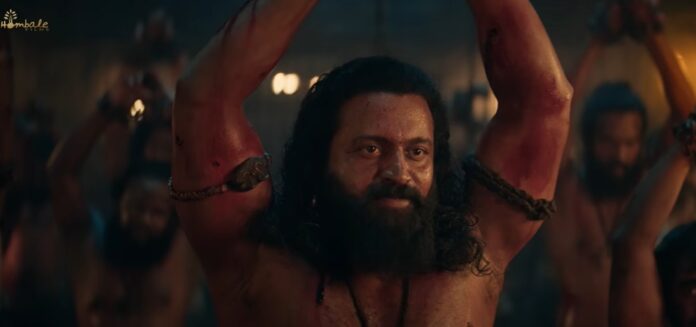
Kantara Chapter 1, Movie Review: In an era where Indian cinema often leans on spectacle over soul, the movie arrives like a divine invocation, raw, rooted, and roaring with purpose. Directed by and starring Rishab Shetty, this prequel to the 2022 cult phenomenon Kantara doesn’t just expand the universe; it deepens it, elevating the mythos into something timeless and transcendent.
Set during the reign of the Kadamba dynasty, Kantara Chapter 1 plunges us into the spiritual and political origins of the land that would later become the battleground of gods and men. The story follows Berme, a tribal warrior chosen by fate and fire, as he confronts royal oppression and spiritual awakening. Unlike its predecessor, which unfolded in the 1990s, this chapter is steeped in ancient lore, where faith isn’t just personal, it’s political.
The screenplay is deliberate, almost meditative in its first half, as it builds the world with reverence. The forests aren’t just backdrops; they breathe, whisper, and watch. The rituals aren’t just performances; they’re portals. And when the divine finally descends, it’s not with CGI bombast but with visceral, spine-tingling intensity.
Rishab Shetty: The Vessel and the Voice in Kantara Chapter 1
Rishab Shetty doesn’t act in Kantara Chapter 1, he transforms. As Berme, he channels rage, vulnerability, and transcendence with a physicality that borders on spiritual possession. His performance during the climactic Bhoota Kola sequence is nothing short of hypnotic, a moment where cinema, culture, and cosmic energy collide.
Rukmini Vasanth, as Princess Kanakavathi, brings grace and gravitas, her character torn between duty and empathy. Gulshan Devaiah and Jayaram add layers to the royal court, though their arcs occasionally feel underexplored. Still, the ensemble holds strong, especially in scenes where tribal unity is portrayed with poetic power.
If Kantara Chapter 1 is a prayer, then Ajaneesh Loknath’s score is its chant. The music doesn’t just accompany the visuals, it elevates them. From haunting flutes to thunderous percussion, the soundtrack is a spiritual experience in itself. While it may not have a single anthem as iconic as “Varaharoopam,” the overall soundscape is richer, more immersive, and deeply rooted in the soil of the story.
Visuals That Speak in Tongues
Cinematographer Arvind Kashyap crafts frames that feel like ancient paintings come to life. The use of natural light, shadow, and smoke creates a visual language that’s both grounded and ethereal. The chariot chase sequence, in particular, is a masterclass in tension and choreography, brutal, beautiful, and unforgettable.
At its core, it is a story about land, legacy, and liberation. It’s about how faith can be weaponized, but also how it can heal. It’s about the divine not as a distant deity, but as a force that lives within the oppressed, the forgotten, the forest.
The film doesn’t shy away from political undertones, caste, class, and colonial echoes ripple through the narrative. But it never becomes preachy. Instead, it lets the story speak, often through silence, ritual, and rage.
The movie is a mythic experience, a cinematic offering that demands surrender. It’s slower than its predecessor, more meditative, and occasionally uneven in pacing. But when it soars, it touches the divine.
For those seeking spectacle, it delivers. For those seeking soul, it overwhelms. And for those who believe cinema can be sacred, this movie is a revelation.
Spoiler-Free Breakdown: Key Scenes That Define the movie
- The Divine Awakening
Early in the film, we witness a ritual that marks the spiritual heartbeat of the story. The scene is drenched in mysticism, with Rishab Shetty’s character Berme entering a trance-like state that feels both terrifying and sacred. It sets the tone for the film’s spiritual stakes. - The Chariot Chase
A standout action sequence unfolds in the forest, where tribal warriors ride chariots and horses, a symbolic moment of reclaiming dignity. The choreography is tight, the stakes are high, and the cinematography makes it feel mythic. - Berme’s Transformation
Without giving away the details, Berme undergoes a spiritual metamorphosis that echoes the divine possession scenes from the original. It’s a moment of reckoning, both personal and cosmic, and Shetty’s performance is electric. - The Confrontation at Bandar Port
This scene is a turning point in the power dynamics between the Kantara tribe and the Bangara kingdom. It’s tense, beautifully staged, and emotionally charged, a masterclass in storytelling without excess dialogue. - The Climactic Ritual
The finale is a visual and emotional crescendo. With haunting music, divine symbolism, and raw emotion, it’s being hailed as one of the most powerful climaxes in Indian cinema, a moment that leaves audiences breathless.
Rating: 4.5/5 — A divine descent into storytelling that honors tradition while redefining genre.